
Racial Ambiguity in American Culture
What happens to a country that was built on race when the boundaries of black and white have started to fade?
Overview
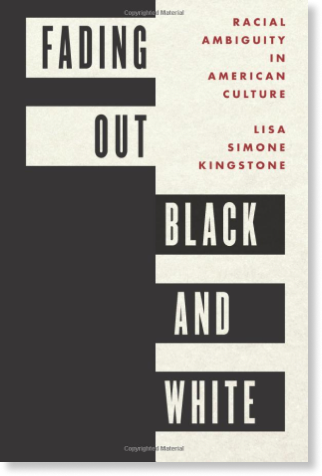
In a nuanced reading of culture in a post-Obama America, Fading Out Black and White asks what will become of the racial categories of black and white in an increasingly multi-ethnic, racially ambiguous, and culturally fluid country. Through readings of sites of cultural friction—such as the media frenzy around “transracial” Rachel Dolezal, the new popularity of racially ambiguous dolls, and the confusion over Obama’s race—the book explores the contemporary construction of race.
A new generation of Americans is exposing the myth of the black/white divide and seeing identity as fluid rather than fixed, and self-determined rather than ascribed. The growing number of “racially mixed” people are claiming all parts of their identity, while readily available DNA testing has debunked the notion of pure racial categories. Even as some Americans continue to defend rigid categories, many others are scrutinizing the notion of race and redefining racial identity for themselves.
Table of Contents
Acknowledgments
List of Illustrations
Preface
Introduction
Overview of the book
Terminology
Chapter 1: Tracing Race: A tour of the Racial Binary
Chapter 2: The Trial of Rachel Dolezal: The First Transracial
Chapter 3: Obama as Racial Rorschach: The First Blank President
Chapter 4: Casting Color: Black Barbie and the Black Doll as Racial Barometer
Chapter 5: Really Black: Black-ish and the Black Sitcom as Racial Barometer
Chapter 6: Talking about Race: Black, White and Mixed Focus Groups
Coda
Appendix
Bibliography
AVAILABLE NOW
FADING OUT BLACK
AND WHITE
This insightful, provocative glimpse at identity formation in the US reviews the new frontier of race and looks back at the archaism of the one-drop rule that is unique to America.
Available at


Book Reviews
Mapping and re-mapping the cultural geography of race and identity are some of the critical, yet most complex endeavors of our time. Lisa Kingstone gives us the tools to navigate this thorny area across both recent history and contemporary culture. It is a forensically crafted masterclass of clarity – essential reading for anyone who is as confused as I am.
Beautifully written, compellingly argued, and exceptionally well-structured. Lisa Kingstone frames her richly illuminating, vital and groundbreaking questions in wonderfully theoretically incisive ways by asking, “what do our reactions and changing representations of black and white say about either our shifting perceptions or the firmness of racial categories?”
Lisa Kingstone’s book challenges people on both sides who are entrenched and invested in the traditional binary of race. She unpacks the concept and explores the exemplars of the moment – Rachel Dolezal and President Obama – and ongoing cultural targets of analysis like children’s dolls and popular media. In her original research using focus groups, she helps us see cracks in the system and how far we have to go if we have any hope to unleash human richness, complexity, and ambiguity beyond binary.
Cultural narratives around the black/white binary in America are changing. Lisa Kingstone takes different kinds of representation, including the response to Rachel Dolezal’s racial construction, to explore the tensions between persistent essentialism and notions of emerging racial fluidity. To this complex territory, she brings analytical acuity and insight in this highly readable and beautifully written book. It will be widely read.